
Gems for Free Clinics from "Lessons from the Capitol: Pivoting Care in the Midst of a Shifting Political Situation"
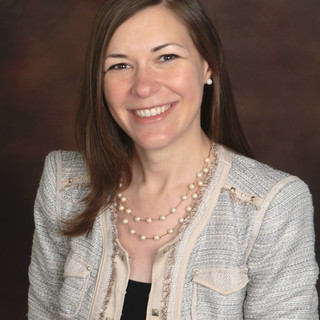
Brigid Muljo, MSN, RN, FNP-BC, Clinic Director and Patricia Matos-Puentes, MD, Medical Director, presented this session at the 2026 National Association of Free and Charitable Clinics (NAFC) Symposium. Both speakers work with Catholic Charities' Volunteer Medical Services in Washington, DC. They shared how their clinic continues to evolve amidst changes to Medicaid and expected increased demand for services.
I found many of their points relevant to Free and Charitable Clinics across the US and prepared a summary of them:
Clinics must be willing to pivot, not just “try harder.”
When data and feedback show a program isn’t reaching the intended population (disengaged patients, volunteers dropping off, persistent poor outcomes), it’s a signal to pivot, not simply invest more energy in the same model (avoid the sunk cost fallacy).
The role of free and charitable clinics is shifting from provider of care to connector of care.
Future success is defined less by how many visits you provide and more by how effectively you:
Connect patients to coverage
Navigate them to specialty and social services
Coordinate care across a network of partners.
Policy shifts (Medicaid/work requirements) will significantly increase demand and complexity.
Large cuts to Medicaid, new work requirements, and insurance churn will produce:
More uninsured patients and ER misuse
Medication rationing and lost specialty care
Higher administrative burden to determine eligibility and maintain continuity.
Clinics should assume demand and complexity will rise and plan accordingly.
Navigation is now core clinical infrastructure, not a “nice-to-have.”
Patients cannot navigate complex eligibility, recertifications, and fragmented services on their own.
Key pivots:
Hire or designate eligibility specialists and navigators
Build structured navigation programs (enrollment help, appointment scheduling, warm handoffs, even transportation)
Measure success by connections to care, not just in-clinic visits.
Community assessment must drive strategy and geographic focus.
Start with a data-driven community needs assessment to clarify:
Who is most at risk now (e.g., immigrant populations, disenrolling Medicaid members, specific counties)
Where your clinic is uniquely needed versus where FQHCs or others can serve better.
Example: DC clinic realized most patients were from Maryland and fearful of traveling into DC, then pivoted to pop-up eligibility and ultimately a clinic site in Maryland.
Partnerships and MOUs are essential risk mitigation tools.
Long-standing informal arrangements (specialty access, charity hospital programs, long-time funders) can disappear overnight.
Lessons:
Formalize relationships with MOUs, especially for specialty care and hospital-based services
Partner rather than replicate: let food banks, housing agencies, legal aid, and FQHCs do what they do best while you become the connector.
Success metrics must expand beyond visit volume.
Funders may still want numbers served, but leadership needs a broader dashboard:
Outcomes (BP/diabetes control, continuity of care)
Number of patients connected to external services (dental, food, housing, legal, specialty)
Strength and breadth of partnership networks.
Internal strategic planning should prioritize service mix and impact, not just raw volume growth.
Diversified workforce and volunteer pipelines are critical to resilience.
Over-reliance on a single type of clinician (e.g., retired volunteers) is risky.
Build multiple pipelines:
Universities (students, interpreters, scribes)
AmeriCorps and service-year programs
Public Health Service officers, government employees with paid volunteer hours
Hospital-based faculty, fellows, and residents.
Also examine your org chart and ask: what can be done by non-licensed staff to stretch scarce clinical FTEs?
Technology and systems (including AI and EHR workflows) should reduce friction, not add it.
Use AI/automation to handle routine calls and routing, freeing staff to focus on in-person needs.
Invest in training volunteers on your EHR and consider scribes (students) to reduce provider documentation burden.
Build simple, repeatable onboarding processes (videos, test patients, standardized workflows) for rotating volunteers.
Strategic funding and diversification enable adaptation.
To sustain pivots (new staff, new sites, expanded navigation), clinics must:
Diversify grants and seek multi-year, multi-million commitments where possible
Avoid dependence on a single long-time funder or one dominant revenue stream
Use partnership stories (MOUs, specialty network size, social service linkages) as part of the value case to funders.
These lessons collectively reinforce a central theme: in a volatile policy environment, resilient clinics are those that pivot based on data, deepen navigation and partnerships, and redefine success around connection and outcomes rather than sheer visit volume.
Learn more about Catholic Charities' Volunteer Medical Services.
Learn more about how I work with Free and Charitable Clinics and their associations to increase access to healthcare and improve health outcomes.

Comments